Alright, let's talk decks. Specifically, wooden ones. If you're thinking about putting up a new deck or replacing an old one here in Medina, you've really got two main choices for wood: pressure-treated lumber or natural cedar. They both have their good points, but trust me, they're not the same beast. I've built plenty of both over the years, and I've seen firsthand how they stand up to our Minnesota weather — from those brutal winters to our humid summers. So, let's dive in.
Pressure-Treated Lumber: The Workhorse Option
Pressure-treated wood, usually pine or fir, is probably what most folks picture when they think "wood deck." It's basically lumber that's been soaked with chemical preservatives under high pressure. This process makes it tough against rot, fungal decay, and even bugs. That's a huge plus, especially with our freeze-thaw cycles and the damp spots you sometimes find around here, particularly in those lower areas near Hamel Road where water can linger a bit longer.
Cost: This is where pressure-treated wood really shines for many homeowners. It's usually the cheapest option upfront. You'll pay a lot less per board foot for pressure-treated lumber compared to cedar. If your budget is tight but you still want a sturdy wood deck, this is probably your best bet.
Durability: Don't let the lower price tag fool you; this stuff is tough. Thanks to those chemicals, it resists decay and insects really well. It can easily last 20-30 years, sometimes even longer, if we install it correctly and you keep up with the maintenance. The biggest issue I often see with its durability is warping or cracking if it's not properly seasoned or if it's left totally untreated for too long.
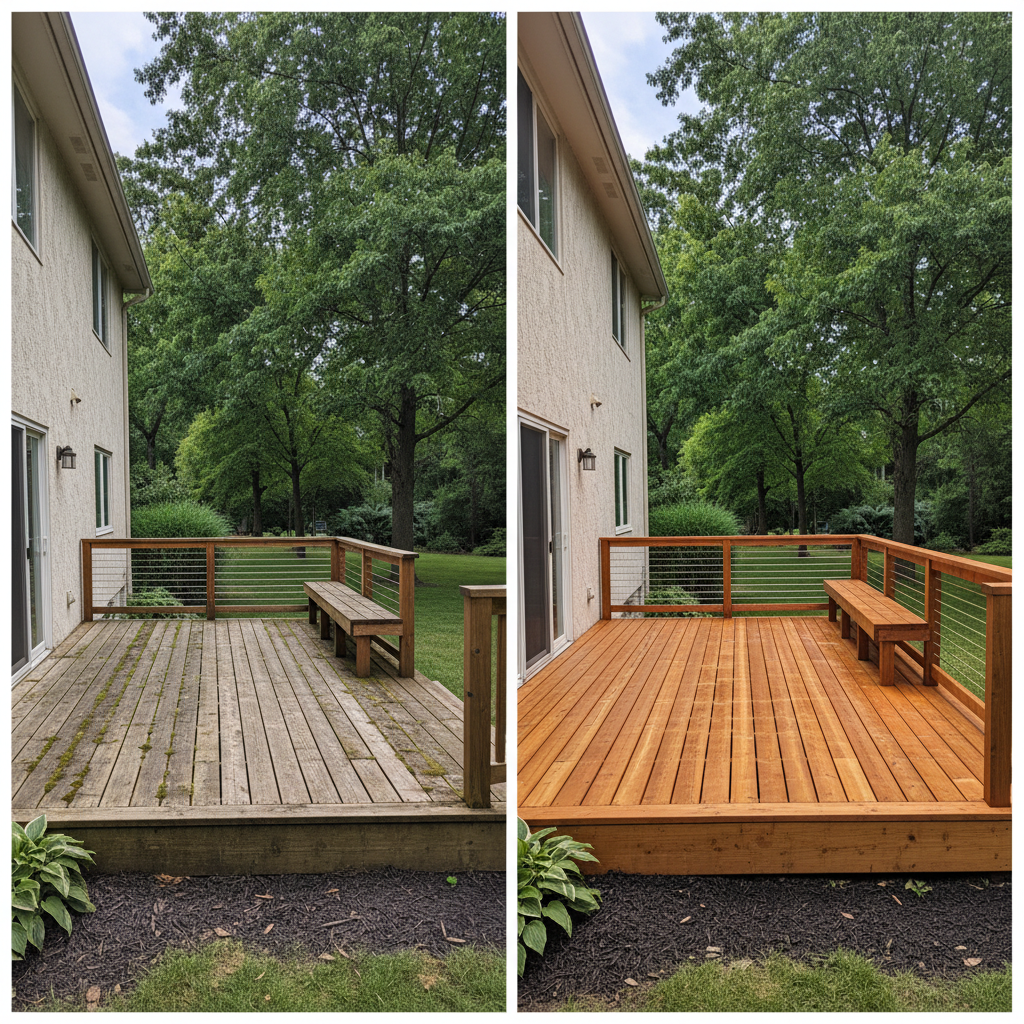
Maintenance: This part is super important. Pressure-treated wood absolutely needs regular care. You'll want to clean it every year, and then stain or seal it every couple of years. This protects it from the sun's UV rays, stops it from soaking up too much moisture, and keeps it looking good. If you skip this, it'll turn gray, splinter, and generally look pretty sad fairly quickly. It's a commitment, but a necessary one.
Appearance: Fresh pressure-treated lumber usually has a greenish tint from the treatment process, which eventually fades to a grayish-brown. It just doesn't have the natural beauty or distinct grain patterns you get with cedar. It's more about function. You can stain it pretty much any color, which helps, but it won't have that rich, natural wood look right away.
Cedar: The Natural Beauty
Now, let's talk about cedar. Specifically, Western Red Cedar is what we typically use for decks around here. It's a naturally beautiful wood, and it has some fantastic qualities that make it an excellent decking material.
Cost: Cedar will definitely be more expensive than pressure-treated lumber, often by a significant margin. You're paying for that natural beauty, its inherent resistance, and the fact that it's just a premium product. If budget is your absolute top priority, cedar might be a bit of a stretch.
Durability: Cedar naturally contains oils that make it resistant to rot, decay, and insects. You don't need all those chemicals like you do with pressure-treated wood. It's also more stable, meaning it's less likely to warp, check, or split compared to pressure-treated lumber. It holds up really well to our climate, too. I've seen cedar decks right here in Medina that are 25+ years old and still look amazing, assuming they've been looked after.
Maintenance: Even though cedar is naturally resistant, it still needs some love. You'll want to clean it every year. To keep its rich color and protect it from UV rays, you should put a good quality stain or sealer on it every 2-3 years. If you don't, it'll weather to a lovely silvery-gray patina, which some people actually prefer, but it won't have the same vibrant look. It's less about stopping rot and more about keeping its good looks and preventing surface wear.
Appearance: This is where cedar truly shines, wouldn't you agree? It has a gorgeous, rich reddish-brown color with beautiful grain patterns. It even smells fantastic when it's new. It just has a more premium, natural, and classic look that many homeowners really love. It adds a certain warmth and character that's tough to get with stained pressure-treated wood.
So, Which One Should You Pick for Your Medina Deck?
Here's my take, after all these years building decks for folks right here in Medina. It really comes down to what matters most to you.
If you're looking for the most economical choice upfront, and you're ready to commit to regular staining and sealing to keep it protected and looking decent, then pressure-treated lumber is a solid pick. It's durable, it'll get the job done, and it's a real workhorse. It's a great option for a first deck or if you're planning to replace it within 15-20 years anyway.
However, if your budget allows, and you value natural beauty, a more stable wood, and a slightly lower maintenance burden (in terms of preventing rot, though it still needs aesthetic care), then cedar is definitely the way to go. It just has a more upscale feel and a timeless look that really complements many of the homes we see around here, from the newer builds to the more established properties. For a long-term investment that really boosts curb appeal and enjoyment, cedar often wins out.
At Champion Decks, we build with both, and we'll always chat through the pros and cons with you based on your specific needs and budget. There's no single "best" answer for everyone, but understanding these differences will help you make the right call for your backyard.