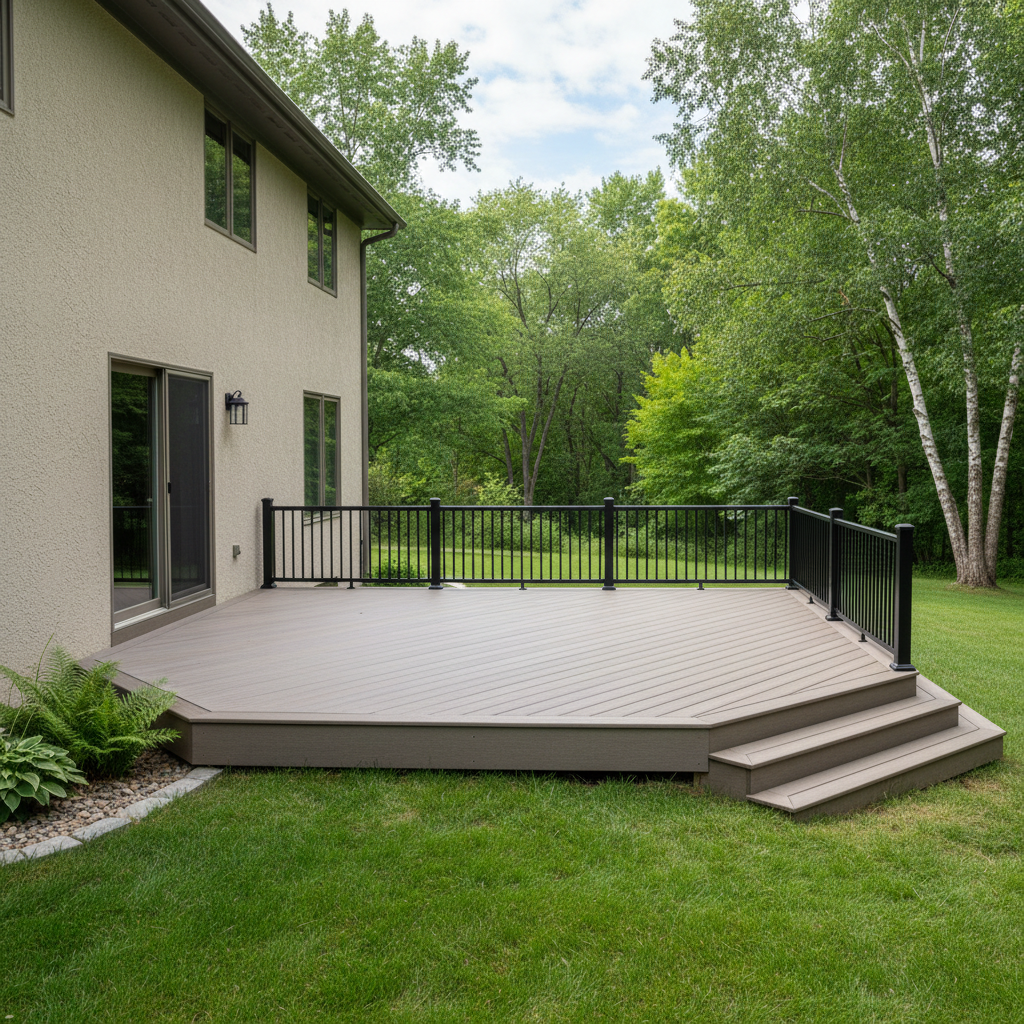
Alright, let's talk Trex decks. You're looking at composite, which is a smart move, especially with our Minnesota weather. It's low-maintenance, looks fantastic, and really holds up. But here's the kicker: even with a great product like Trex, homeowners in Medina still manage to make some pretty common blunders when they're planning or hiring for their project. I'm not talking about picking the wrong color, mind you; I'm talking about stuff that can cost you a bundle or leave you wishing you'd done things differently.
Not Getting Specific Enough with the Design
This one's a huge deal. People often come to us with a general idea – 'I want a big deck' or 'I want a two-level deck.' That's a start, sure, but it's not nearly enough. You really need to think about how you'll actually *use* that space. Are you grilling out there every night? Do you need room for a dining table that seats eight, or just a couple of chairs for your morning coffee? What about a fire pit? Or a hot tub? These aren't just about looks; they dictate the size, the layout, and even the structural requirements of your deck.
If you don't nail down these details upfront, you'll get a quote for a generic deck. Then you'll be surprised when adding that built-in bench or a privacy screen costs extra, or worse, isn't even possible with the initial design. We've seen folks in the Hamel area, for instance, who wanted to maximize their backyard views but didn't specify railing types. Later, they were disappointed when a solid rail blocked their sightline. So, think through your daily life on that deck before anyone even draws a line.
Ignoring the Groundwork (Literally)
You're building on Minnesota soil, folks. It freezes, it thaws, it moves. I can't emphasize enough how important proper footings are. We're talking about frost depth here, which is usually 42 inches in our neck of the woods. If your contractor isn't digging deep enough, or if they're cutting corners on the concrete, you're going to have problems. Your deck will heave, sag, and become uneven over time. That beautiful Trex surface won't look so hot when the whole structure is out of whack.
Ask your potential contractors about their footing process. How deep do they dig? What kind of concrete do they use? Do they use helical piles for tricky spots? If they gloss over this, that's a major red flag. This is the foundation of your deck, and it's definitely not where you want to save a buck. You don't see it once it's done, but you'll certainly feel it if it's not right.
Not Checking References or Insurance
This sounds like basic advice, but you'd be amazed how many people skip it. They get a good vibe from a contractor, or maybe they're the cheapest bid, and they just go with it. Don't. Always, always, always ask for references. And actually call them. Ask about the communication, the timeline, the cleanup, and if there were any unexpected issues, how they were handled. A good contractor isn't perfect, but they handle problems professionally.
And insurance? Non-negotiable. Your contractor needs to carry general liability insurance and workers' compensation. If they don't, and someone gets hurt on your property, or they damage your house, you could be on the hook. It's just not worth the risk. A reputable company like Champion Decks will have all their paperwork in order and be happy to show it to you. If they hem and haw, walk away.
Focusing Only on the Deck Surface Cost
Trex is a premium product, and it's an investment. But the cost of the Trex boards themselves is only one piece of the puzzle. There's the framing, the footings, the railings, stairs, permits, labor, and any custom features you want. Homeowners sometimes get sticker shock because they only budgeted for the square footage of the decking material.
When you're getting quotes, make sure they're itemized. You need to see what you're paying for. If a quote comes in significantly lower than others, it's usually not because they found a secret stash of cheap Trex. It's often because they're cutting corners elsewhere – maybe on the framing materials, the fasteners, or even just not including things like permits or proper disposal. A cheap bid upfront can turn into a very expensive headache down the road if you have to fix shoddy work or deal with code violations.
Ignoring Local Building Codes and Permits
Medina has building codes, and you need to follow them. This isn't just bureaucracy; it's about safety. Your deck needs to be built to withstand snow loads, wind, and general use. A good contractor will handle the permit process for you, but it's ultimately your responsibility as the homeowner to ensure one is pulled and inspections happen. If you build without a permit, you could face fines, be forced to tear it down, or have issues when you try to sell your home.
Don't let a contractor tell you a permit isn't necessary for 'just a deck.' If it's attached to your house or above a certain height, it almost certainly is. Ask to see the permit application and the inspection schedule. It's a simple step that protects your investment and your family.
Look, building a Trex deck is a fantastic way to enhance your home and enjoy our beautiful Minnesota seasons. Just make sure you're going into it with your eyes wide open, asking the right questions, and working with someone who truly knows what they're doing. It'll save you a lot of grief in the long run.